
At a glance
- Client: A European-led private investor group holding land for a resort and villa project in West Nusa Tenggara
- Sector: Real estate and tourism investment
- Region: Indonesia (West Sumbawa, Lombok, Bali)
- Service: Investment case, business plan and risk analysis
The challenge
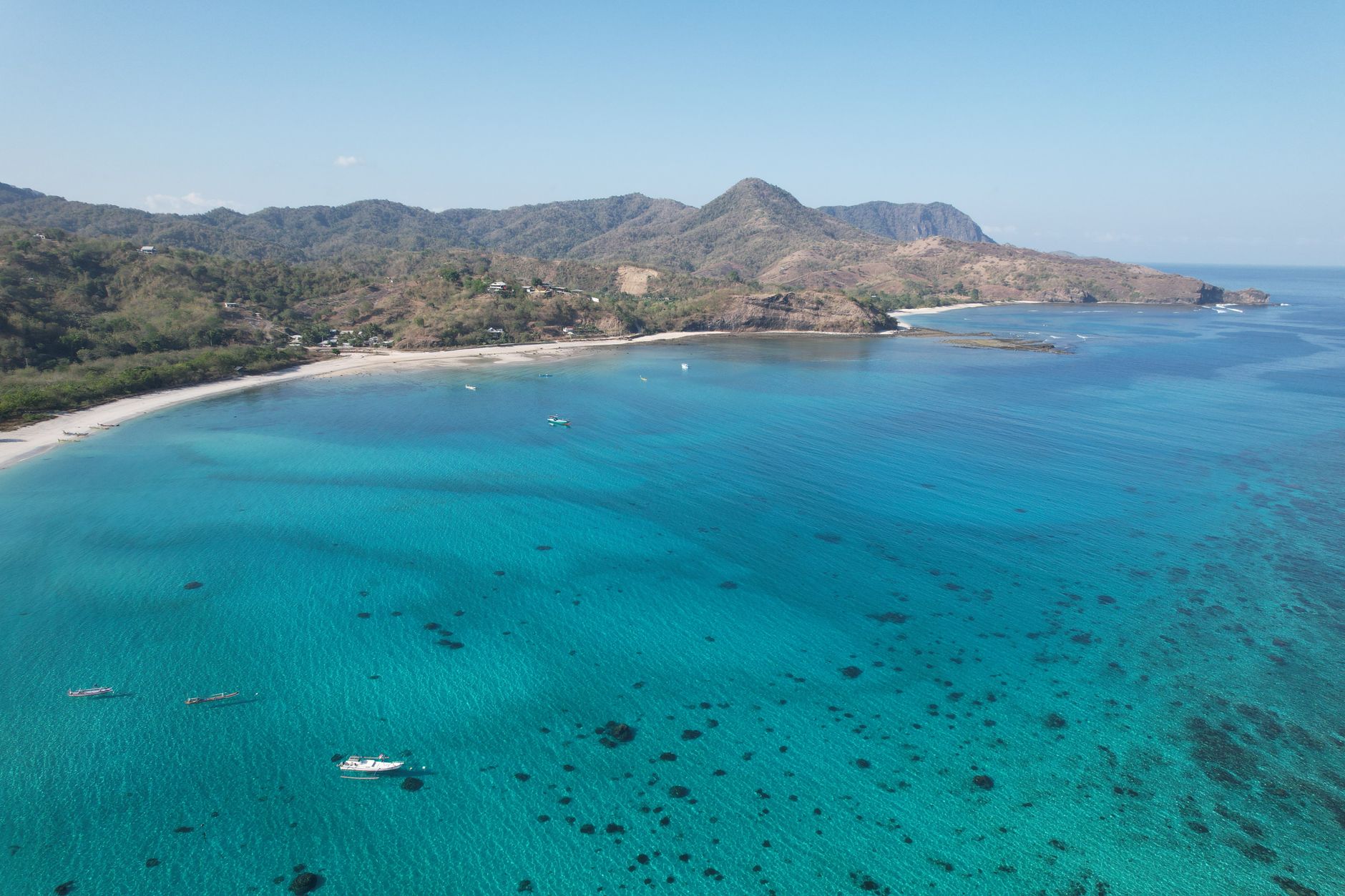
The client held land in West Sumbawa, a regency on the western tip of Sumbawa Island that few foreign investors know. To raise money for a phased resort and villa development, they needed an investment case that investors could check. The questions were concrete. How do land prices in West Sumbawa compare with Bali and Lombok, and how did prices in those islands move as tourism grew? What infrastructure is coming, and what could go wrong? And how can a foreign investor legally hold and develop land in Indonesia, and what tax applies?
What we did
- Compiled land price data for Bali, Lombok and West Sumbawa from ATR/BPN land value maps (2024), property listing portals and published studies.
- Built a land price model in Excel covering 2000–2045: historical values per are (100 m²) from 2000 to 2023, then forecast scenarios for each island.
- Compared the three islands on tourism maturity: attractions, airports, ports, road length, and counts of tour operators, hotels, restaurants and spas.
- Reviewed tourism and economic data from BPS NTB and Indonesian statistics, government infrastructure plans (airport, roads, dam, wind power) and investment figures.
- Defined target investor groups (long-horizon and pension-type investors, high-net-worth individuals, moderate-risk emerging-market investors) using Capgemini and Statista data.
- Drafted a phased development mix (bungalows, villas, treehouses), an operating team structure and two exit options.
- Researched PT PMA set-up, land-use rights (HGB, Hak Pakai, HGU), Indonesian corporate and property taxes and double-taxation treaty rates.
- Wrote a separate risk and mitigation paper on deforestation, sea-level rise, mining activity, seismic activity and access.
Topics covered
- Land price history and comparison: Bali, Lombok, West Sumbawa
- Tourism arrivals and infrastructure pipeline in West Nusa Tenggara
- Investor target segments and development mix
- Financial projections and exit strategy
- PT PMA set-up and land-use rights for foreigners
- Corporate, property and withholding tax; double-taxation treaties
- Environmental, seismic and access risks with mitigations
What we delivered
We delivered a business plan (about 40 pages, with financial projections, risk assessment, marketing, operations and a regulatory annex) and an investment opportunity report that went through four revisions (about 30 pages). We also delivered a short risk and mitigation paper and an Excel land price model for 2000–2045. Project records also list a pitch deck.
Business plan
Google Doc · approx. 40 pages
- Executive summary and market comparison of the three islands
- Target investor segments with global wealth and pension data
- Investment strategy: property and development types, phased build
- Revenue, cost and margin projections
- Risk assessment: seismic, cost inflation, weather, environment
- Marketing, sales and operating plan
- Regulatory annex: PT PMA set-up and land-use rights
Investment opportunity report (REV4)
Google Doc · approx. 30 pages
- Land price history for Bali, Lombok and West Sumbawa
- Comparative table of land prices, infrastructure and amenities
- Tourism development indicators and infrastructure pipeline
- Land value trend scenarios to 2045
- PT PMA set-up steps
- Indonesian taxation and treaty withholding rates for 23 countries
Risk and mitigation paper
Google Doc · short paper
- Deforestation in West Nusa Tenggara
- Climate change, sea-level rise and mining tailings
- Tourism infrastructure and access gaps
- Mitigations: conservation partnerships, coastal defences, promotion
Land price model 2000–2045
Excel · 1 workbook
- Historical land values per are for each island, 2000–2023
- Annual growth and inflation assumptions
- Forecast scenarios 2024–2045
- Indexed comparison charts and source list
What we found
- Land in West Sumbawa was priced at a small fraction of Bali land. The report put Bali land at almost ten times West Sumbawa prices.
- The amenity gap was large. West Sumbawa had 1 star-rated hotel, 39 non-star hotels and no registered tour operators. Badung in Bali had over 400 tour operators and Mataram in Lombok had 28 star hotels.
- Access was the main constraint and the main upside. Kiantar airport in West Sumbawa was reported at 57% construction progress in April 2024, alongside new road projects.
- Foreigners cannot own freehold land. A PT PMA with land-use rights (HGB or Hak Pakai) is the usual route, with an IDR 10 billion minimum investment plan.
- Key risks were tree-cover loss in the province, mining tailings in coastal waters, earthquakes (38 events above magnitude 2 recorded in early 2024) and long travel times to beaches.
- Our scenario model assumed faster land value growth for West Sumbawa (18.8% a year, 2024–2045) than for Lombok (7.9%) or Bali (7.2%). These are modelled assumptions, not observed trends.
In numbers
- Land prices per m²: Bali US$104–1,200; Lombok US$30–606 (ATR/BPN 2024 and listings, as compiled in our report)
- Tourist visits to West Sumbawa: about 6,000 in 2018 to about 63,000 in 2022 (BPS, as cited)
- International arrivals to West Nusa Tenggara: 126,000 in 2022 to 403,000 in 2023 (BPS NTB 2024)
- Investment realised in West Sumbawa in 2023: US$1.2 billion against a US$600 million target (regional government, as cited)
Key takeaway
An early-stage destination is cheap for a reason. Put the land price gap next to an honest list of access, environmental and legal constraints before you show it to investors.