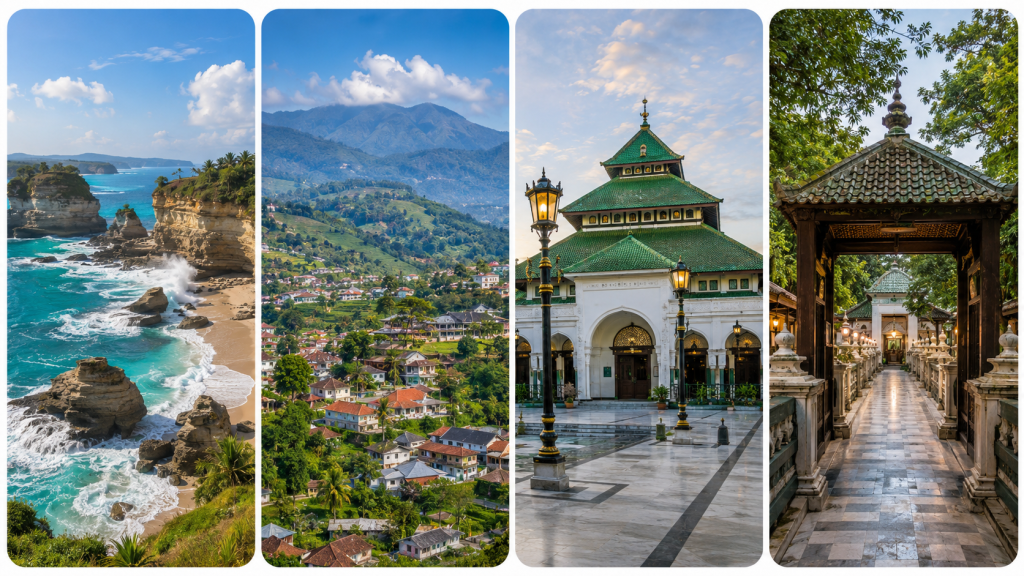
For all the attention directed toward foreign tourists, East Java’s tourism engine runs on its own people. The province is Indonesia’s number-one destination for domestic travelers, and in February 2026 alone it reported 16.13 million domestic trips.
At first glance, the number is impressive. In reality, a closer look tells a different story. Behind the headline volume lies a province where the rewards of tourism are spread unevenly. The challenge, then, is not attracting more visitors, but distributing them more evenly.
By The Numbers
| #1 | Domestic tourism rank (2025) |
| 16.13M | Domestic trips to East Java in February 2026 alone |
| 6.24% | Accommodation & dining share of GDP |
| ~43% | Star-hotel occupancy (Feb 2026) |
Who is Traveling
The domestic market has a character all its own. These travellers move year-round rather than in seasonal waves. They typically travel during weekends and school holidays and often set out as families or friend groups by car. Many come from within East Java itself and neighboring provinces. Their travel is largely shaped by short visits to beaches, hill towns, and religious and heritage sites. That steady, home-grown demand is what keeps the province’s hotels, restaurants, and transport operators busy between the peaks of international arrivals.
Volume Without Balance
Tourism is one of East Java’s key economic sectors. According to BPS, hotels and restaurants alone contribute 6.24% to an economy valued at more than Rp3,400 trillion. Despite that, hotels across the province were only about 43% occupied in early 2026, with wide disparities between districts. Regencies including Mojokerto, Gresik, and Kediri recorded hotel occupancy rates close to 60%, while Trenggalek and Probolinggo remained below 17%, despite having attractions of their own. The disparity reflects differences in visibility and access rather than tourism potential. Many lower-ranked districts have waterfalls, beaches, and heritage sites that remain little known to travelers.
💭 East Java attracts plenty of visitors. The question is how to spread them more evenly across its destinations. The opportunity lies in guiding demand toward the regencies that need it most.
Spreading the Benefit
The next phase of East Java’s tourism strategy will depend on narrowing the unbalanced gap between regions. Events, better road and rail access, and coordinated promotion could draw travelers toward quieter regencies and encourage longer stays. If successful, East Java could transform record trip numbers into economic growth that reaches communities across the province instead of being concentrated in a few popular destinations.
See Who’s Fuelling East Java’s Tourism Boom
Domestic travelers keep East Java’s tourism economy running year-round, but international arrivals are reshaping the map too. Discover which countries are driving record foreign visits in Who’s Visiting East Java? Inside the Province’s 2026 Tourism Boom.
Explore our websites for more research, insights, and case studies.