Waste reduction campaigns often assume that people need more information. Survey findings suggest otherwise. Among 1,200 households across 12 Indonesian cities, environmental awareness was already widespread. More than 90% of respondents were familiar with practical waste reduction measures, including buying in bulk, planning purchases, and the 3R principles (Amir Faizal et al., 2025).
By The Numbers
| 97.6% | understood that buying in bulk reduces waste |
| 98.5% | recognised that shopping lists limit packaging waste |
| 93.8% | were familiar with the 3R principle |
What Do They Do?
Attitudes toward waste management are also largely positive. According to Amir Faizal et al. (2025), a survey of 748 respondents found that 75% had participated in a government waste management programme, while 77% agreed that managing waste is a shared responsibility.
But those attitudes do not always translate into practice. Household waste sorting, particularly the separation of organic and inorganic waste, remains limited. At the same time, the National Waste Management Information System (SIPSN) reported that around 40% of Indonesia’s waste went unmanaged.
The Gap Lies in Everyday Habits
The same study points to a different explanation. Around half of respondents said managing waste was troublesome, citing limited infrastructure and complicated processes rather than a lack of interest.
The challenge is making waste sorting easy enough to become a routine. Households need separate bins, collection services that keep waste streams apart, and reliable pickup schedules. When any part of that system breaks down, separated waste is often mixed again during collection, leaving people with little reason to keep sorting at home.
Why Does This Matters Commercially?
Households generate the largest share of Indonesia’s waste, while the country’s population will reach roughly 284 million in 2025, according to Statistics Indonesia (BPS). The demand for easier waste management is already there. However, many households face practical barriers to managing waste, from limited collection services to systems that are difficult to use.
Policy is moving in the same direction. Indonesia’s National Waste Management Plan targets a 30% reduction in waste and 70% waste handling. Similarly, the Ministry of Environment and Forestry’s Regulation No. 75/2019 requires producers to develop and implement waste reduction roadmaps. Reaching those targets will depend not only on policy, but also on making waste management easier for households and businesses.
A More Practical Waste Management Model
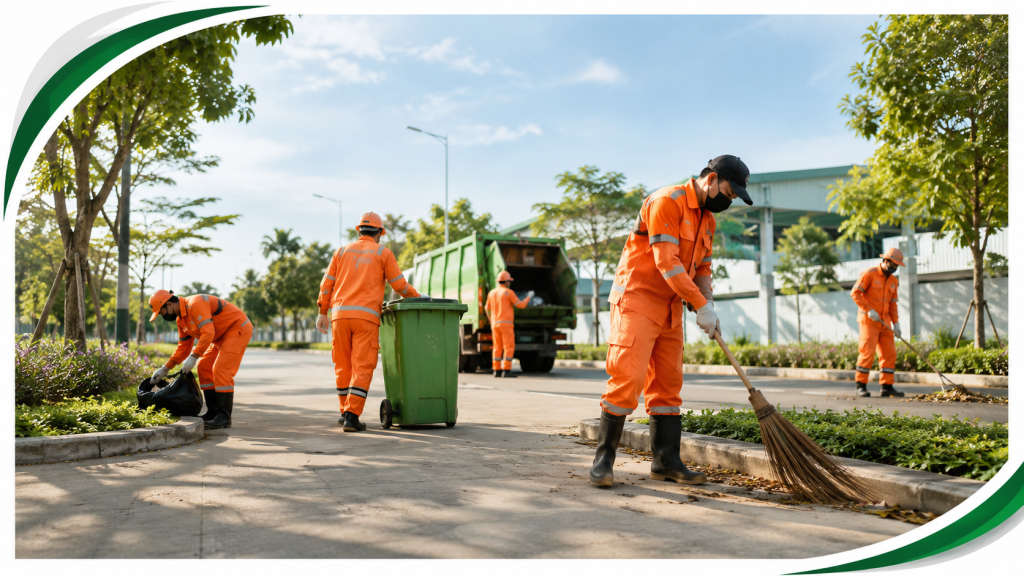
PT Artapura Kurnia Abadi, or Artapuraka, provides licensed waste transportation alongside professional cleaning services. Managing both services under one provider helps keep waste separated throughout the collection process, reducing the coordination required from households and facility managers.
The service model was informed by market research rather than assumptions. RPA analysed market size, customer segments, regulations, customer behaviour, and the competitive landscape to identify where an integrated waste management provider could compete most effectively.
The findings highlight a broader lesson. Awareness of waste management is already high, but everyday practices are shaped by convenience. Services that make waste collection simpler and more reliable are more likely to change behaviour than awareness campaigns alone.
Visit Riset Prima Asia’s portfolio to explore more data-backed market and expansion insights.