
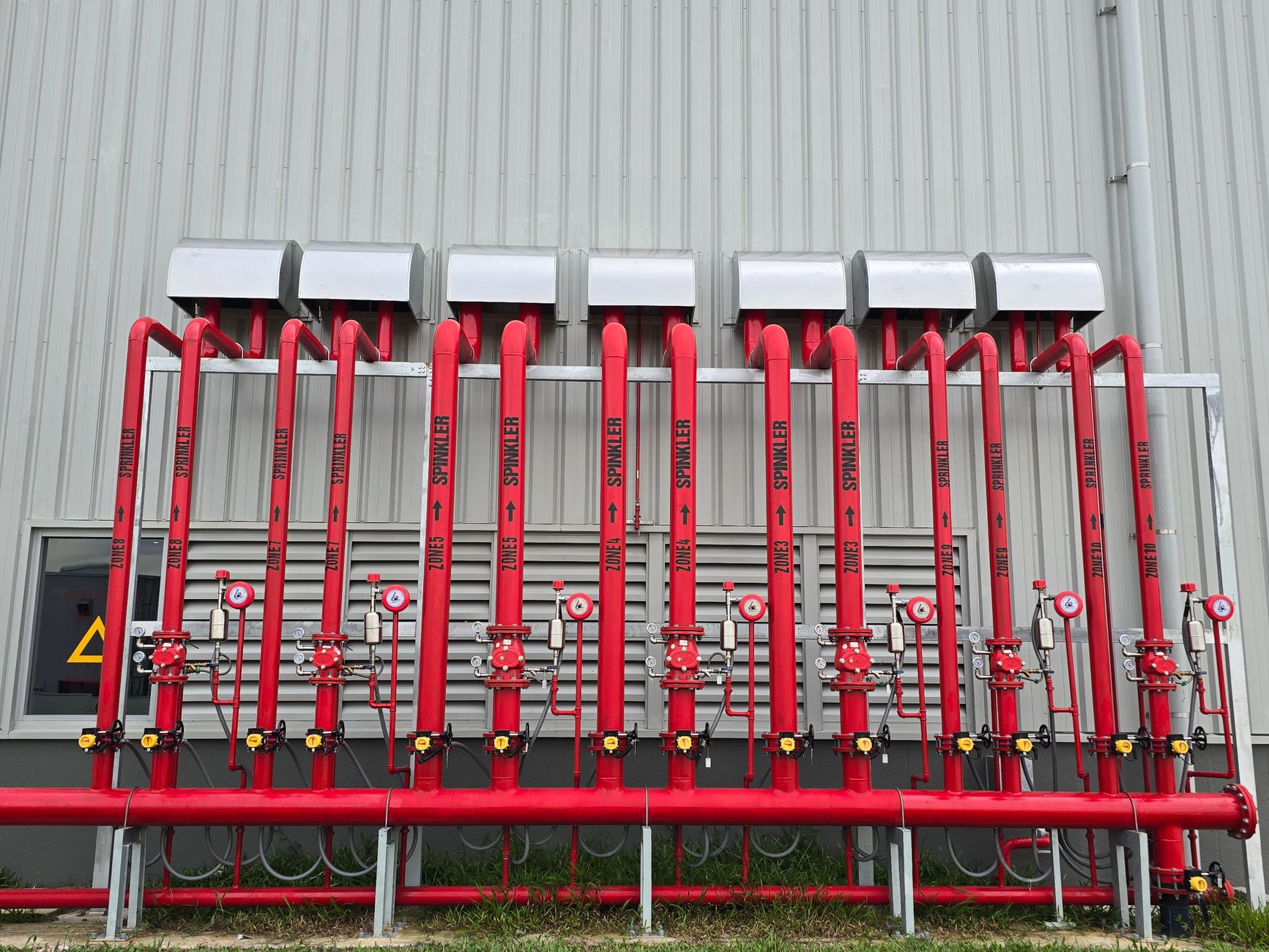
At a glance
- Client: A fire-protection system design firm with BIM modelling capability, planning to offer its services in Singapore
- Sector: Construction / fire-protection engineering
- Region: Singapore
- Service: Market entry research
The challenge
The client designs fire sprinkler and fire-protection systems and works in BIM (3D building information models). It wanted to sell design services in Singapore, a market with strict fire-safety rules and many established consultants. It needed to know how large the design opportunity really is, which rules drive demand, who it would compete with, how such work is priced, and which types of companies would buy outsourced fire-protection design.
What we did
- Reviewed the regulatory framework: the Fire Safety Act 1993, the SCDF Fire Code, the SS CP 52 sprinkler code, SCDF plan submission fees and BIM mandates under Integrated Digital Delivery.
- Sized the market top-down from 2024 building contracts awarded (SingStat), split into residential, commercial, industrial and institutional work, using fire-protection shares of M&E budgets from published cost handbooks.
- Narrowed the result to the design segment (7.5% of system value) and split it across three buyer groups by number of firms.
- Benchmarked ten competitors, from multinational engineering consultancies to small local BIM studios, on size, services, USPs and target sectors.
- Compared pricing models for sprinkler design (fixed fee, per square metre, hourly and full-time-equivalent retainer).
- Profiled five customer segments (construction companies, architects, fire-protection contractors, building owners and Qualified Persons) and their needs.
- Built a list of about 25 potential clients, mostly developers and fire-protection contractors, with company contacts.
Topics covered
- Demand drivers: regulation, high-rise growth, green buildings, lithium-ion and electrical fire risks
- Regulation and SCDF approval process
- Market size for fire-protection systems and design services
- Competitor landscape and gaps
- Pricing models
- Target segments and potential clients
What we delivered
We delivered a written market-entry report (revised after client feedback), a market-sizing spreadsheet with sources for every assumption, and a potential client list.
Market entry report
Report (Google Doc) · 7 chapters plus appendices
- Executive summary
- Demand drivers and regulation
- Competitor profiles and gap analysis
- Pricing models for sprinkler design
- Target customer segments and needs
- Key findings and recommendations
Market sizing workbook
Google Sheets · 3 tabs
- Top-down calculation from building contracts to design market
- Source link for each percentage
- Potential client list
- Regional market chart data
What we found
- We sized Singapore's fire-protection system market at about US$1.20 billion and the design segment at about US$89.7 million, based on 2024 building contracts.
- Construction companies are the biggest buyer group, about US$63.5 million (71%) of the design market, ahead of fire-protection contractors and architects (about US$13 million each).
- Large consultancies offer fire engineering inside full-scope packages, and small studios offer BIM modelling only; few firms focus on BIM-based fire-protection design itself.
- Retrofits are an opening: amended fire-safety rules require around 500 older buildings to upgrade their fire protection.
- We recommended partnering with general and M&E contractors, offering hourly and full-time-equivalent retainer pricing, and pairing design with BIM training that reflects real site conditions.
In numbers
- 1,990 fire incidents attended by SCDF in 2024, up 1.8% on 2023 (SCDF)
- Automatic sprinklers are required in buildings above 24 m habitable height and in most basements (SCDF Fire Code)
- 58.4% of 89 surveyed Singapore construction organisations had three years or less of BIM experience (published survey cited in our report)
Key takeaway
In a tightly regulated market like Singapore, a specialist can win by selling first-time approval and fewer redesigns to the contractors who already hold the projects.